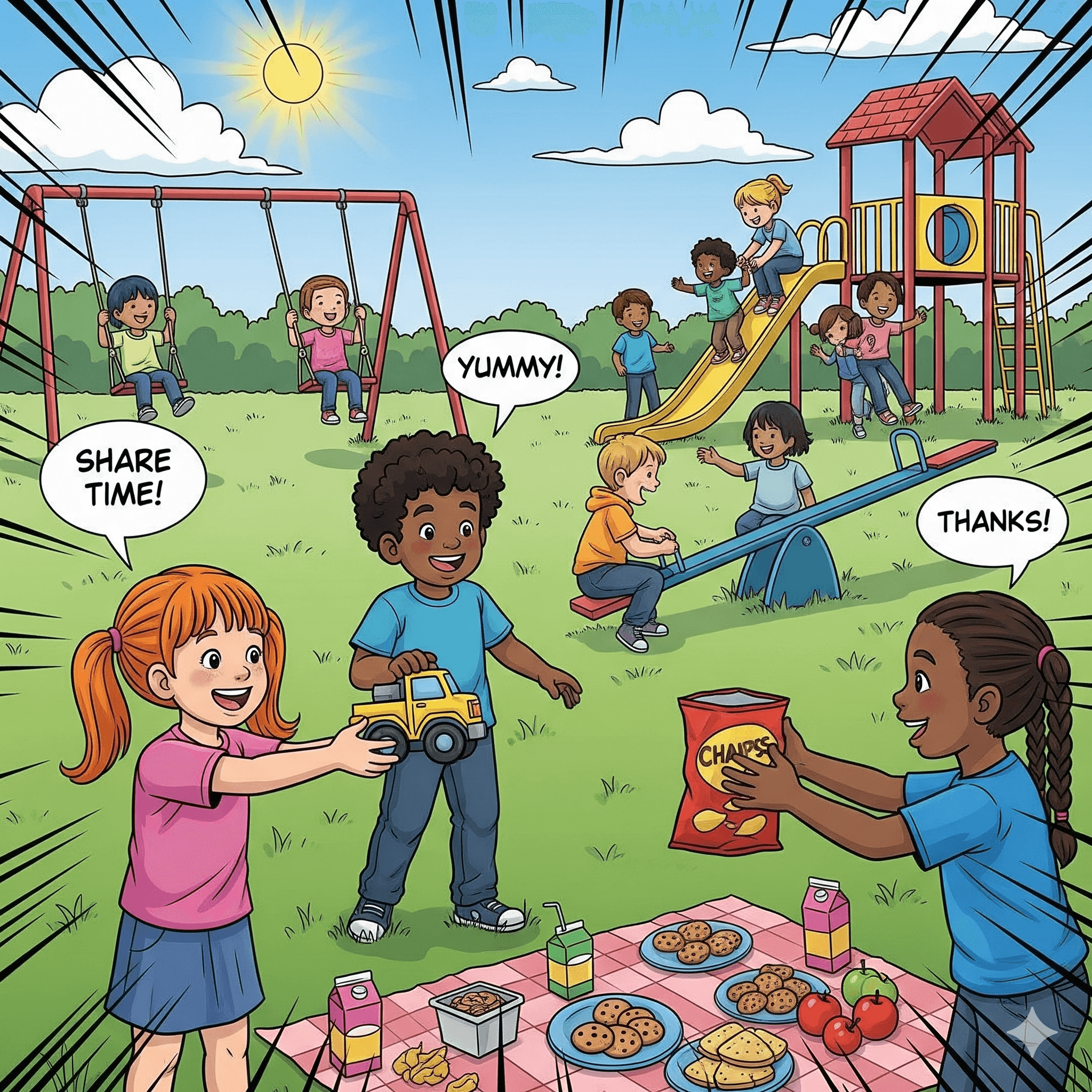
Creating a Culture of Sharing: Strategies for Parents
Why Creating a Culture of Sharing Matters 🤔
Enhances Social Skills
Teaching your child to share fosters crucial social interactions, helping them learn to navigate friendships and communicate effectively with others. This foundational skill promotes empathy and cooperation, setting the stage for positive relationships throughout their lives.
Builds Emotional Intelligence
Encouraging sharing helps children recognize and understand their own emotions and the feelings of others. By practicing sharing, they learn to respond to emotional situations with kindness and compassion, which is essential for healthy emotional development.
Reduces Conflicts
When sharing is normalized at home, it significantly reduces instances of disputes over toys or resources. By embedding a culture of sharing, parents can create a harmonious environment where children feel secure, fostering trust and collaboration among siblings and peers.
Strategies for Creating a Culture of Sharing 📝
Model Sharing Behavior
How to Do It: Regularly demonstrate sharing in your daily life. Use simple, relatable actions such as sharing snacks or helping a family member with a task. Highlight your actions by verbally acknowledging them.
Example: Look, I'm sharing my sandwich with you because I know you like it!" or "Let’s share this game; I’ll let you pick the first round."
Outcome: By observing you share, children learn that sharing is a positive and normal behavior, reinforcing their desire to replicate it in their interactions.
Implement Turn-Taking with Timers
How to Do It: When children are playing with a toy, use a timer to help them understand the concept of taking turns. Set a fair time limit for each turn and communicate this clearly to both children involved.
Example: "You can play with the toy for three minutes, and then it's your sister's turn when the timer goes off. Let’s set it together!"
Outcome: This method helps children grasp the idea of sharing as a temporary arrangement, reducing possessiveness and encouraging patience, leading to a smoother transition between turns.
Encourage Cooperative Play
How to Do It: Create opportunities for children to engage in activities that require teamwork, such as building a fort together or completing a puzzle. Emphasize the importance of collaboration in these tasks.
Example: "Let’s work together to build the tallest tower we can! You can put the blocks on top while I hold them steady."
Outcome: Working together on shared projects fosters a sense of community and demonstrates the joy of sharing experiences, helping children to appreciate the benefits of collaboration over competition.
Beyond Creating a Culture of Sharing 💡
Enhanced Empathy and Cooperation
By modeling sharing behavior, children learn the importance of understanding others' feelings and collaborating effectively. This foundational ability fosters strong friendships and community ties that will benefit them throughout their lives.
Stronger Conflict Resolution Skills
Implementing turn-taking strategies helps children navigate disagreements constructively. Learning to share and compromise equips them with the tools to manage conflicts, leading to more harmonious relationships in the future.
Increased Teamwork and Collaboration
Encouraging cooperative play fosters a sense of belonging and teamwork. Children who engage in collaborative activities develop essential social skills that will serve them well in school and beyond, paving the way for successful group interactions.