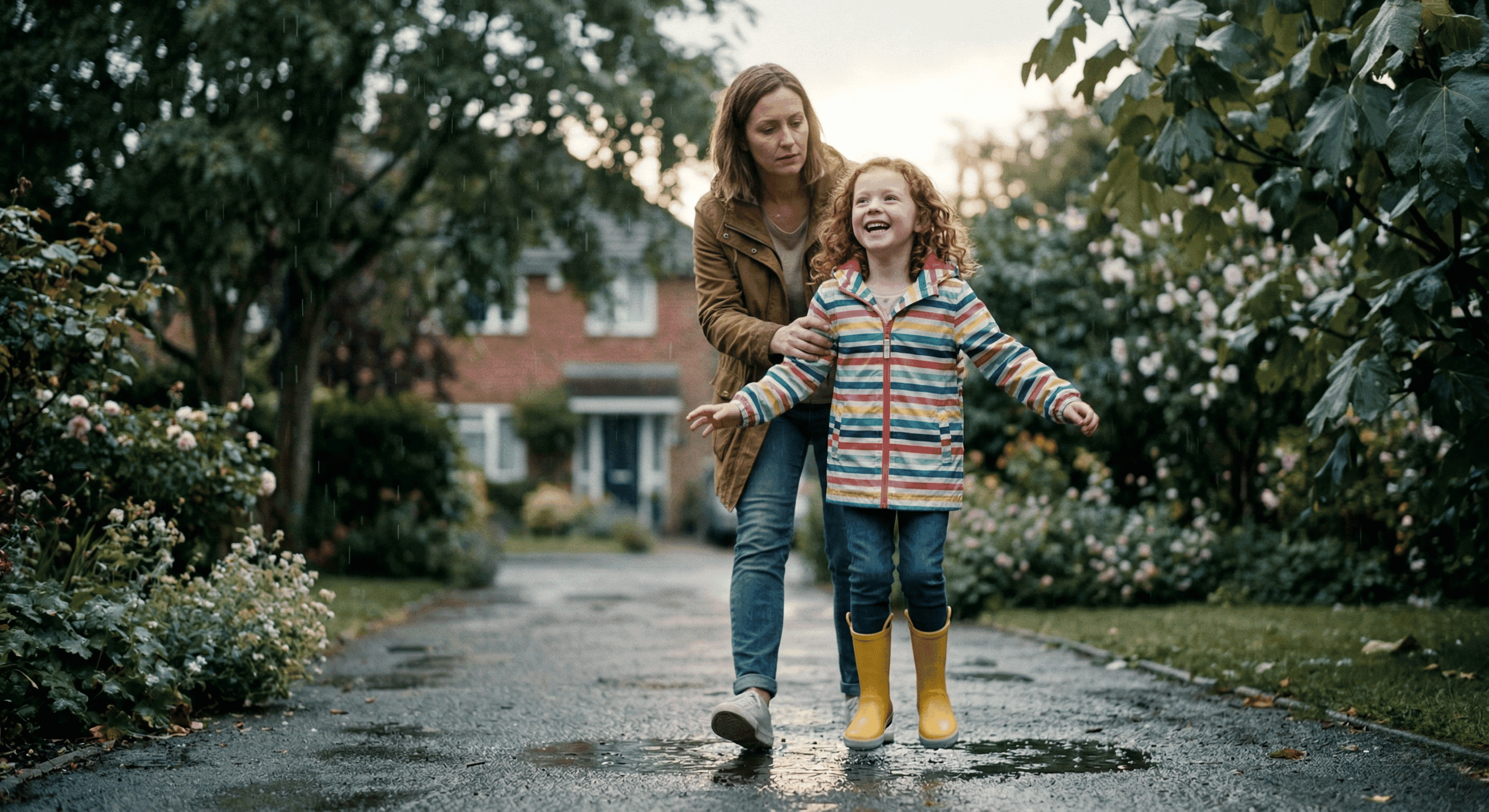
Children happily playing in the rain, splashing in puddles with colorful waterproof gear, surrounded by lush trees and a rainy sky

Rainy Days and Risky Play: Why We Should Let Kids Get Wet

Embrace the Drizzle: Why Rainy Day Play Sparks Your Child's Development

As parents, our instinct is often to shield children from the elements—sending them indoors at the first sign of rain out of concern for discomfort or safety. However, emerging research and progressive educational philosophies reveal that outdoor play—even in the rain—is not just beneficial but vital for cultivating well-rounded development. Allowing children to explore in well-supervised, rainy environments nurtures resilience, ignites creativity, sharpens sensory skills, and fosters a profound connection with nature.

The Transformative Power of Wet and Wild Play: Embracing Risk and Adventure

The term "risky play" might conjure images of danger, but in truth, it encompasses active pursuits that involve challenge, thrill, and mild hazards—valuable opportunities for children to test limits, develop self-regulation, and acquire essential life skills. Under the enchanting spell of a rainy day, such activities can significantly enhance physical, cognitive, emotional, and social growth.

1. Boosting Physical Development

Refining motor skills and coordination Activities like jumping over puddles, sliding on muddy slopes, or balancing on slick logs demand and develop gross motor abilities. Navigating unpredictable terrains challenges children's coordination and balance far more effectively than static indoor routines. Research by Brussoni et al. (2015) confirms that outdoor risky play correlates with improved motor proficiency—foundational for sports, handwriting, and daily movements.

Building Strength and Endurance Playing in the rain—splashing through puddles and trudging through mud—requires physical effort that fortifies muscles and boosts cardiovascular health. The tactile sensations involved also engage core stability and stamina, fostering durable physical fitness.

Engaging the Senses Rain transforms outdoor spaces into multisensory wonderlands—the coolness of water, the rhythmic drumming of raindrops, the earthy aroma of wet soil. Such sensory-rich experiences stimulate brain development and help children process and integrate sensory information vital for learning and coordination.

2. Enhancing Cognitive Skills and Creativity

Igniting Imagination and Storytelling A rainy day turns familiar surroundings into fantastical worlds: puddles become oceans, sticks become ships, mud transforms into modeling clay. This imaginative play nurtures language development, storytelling, and creative thinking—cornerstones of cognitive growth.

Promoting Problem-Solving and Risk Assessment Children learn to evaluate risks—deciding whether a puddle is too deep to jump or if a branch is sturdy enough to support their weight. These decision-making experiences foster executive functions like planning, impulse control, and flexible thinking.

3. Building Emotional Resilience and Well-being

Fostering Confidence and Resilience Overcoming muddy obstacles or enduring a light drizzle instills a sense of mastery. These experiences teach children that they can handle discomfort and adversity, cultivating resilience and confidence that benefit many facets of their lives.

Reducing Stress and Enhancing Mood Natural environments, rain included, have well-documented mental health benefits. The soothing sounds of rainfall and the mindful engagement required for outdoor exploration can help reduce anxiety and promote emotional stability.

Addressing Parental Concerns: Safety, Health, and Practicality

Despite these benefits, many parents hesitate to allow outdoor play in the rain—worried about illness, injury, or inconvenience. However, with accurate information, perceptions can shift to embrace nature's wet wonders.

Myth Busting: Rain, Cold, and Illness

A common misconception is that rain or cold exposure causes illnesses like colds or the flu. In reality, viruses—not dampness or chilly weather—are responsible. Being cold or wet may temporarily weaken immune defenses but does not directly cause infections. Proper clothing, prompt warming afterward, and good hygiene are key to staying comfortable and healthy.

What's Next... Turning Rain into Opportunities for Growth

Encouraging children to play outdoors in the rain unlocks a multitude of developmental benefits—physically, cognitively, emotionally, and environmentally. By providing suitable protective gear and supervised, challenging play, parents foster resilience, ignite creativity, and nurture independence.