A Teacher’s Guide: When Kids Lash Out in Class
The Moment
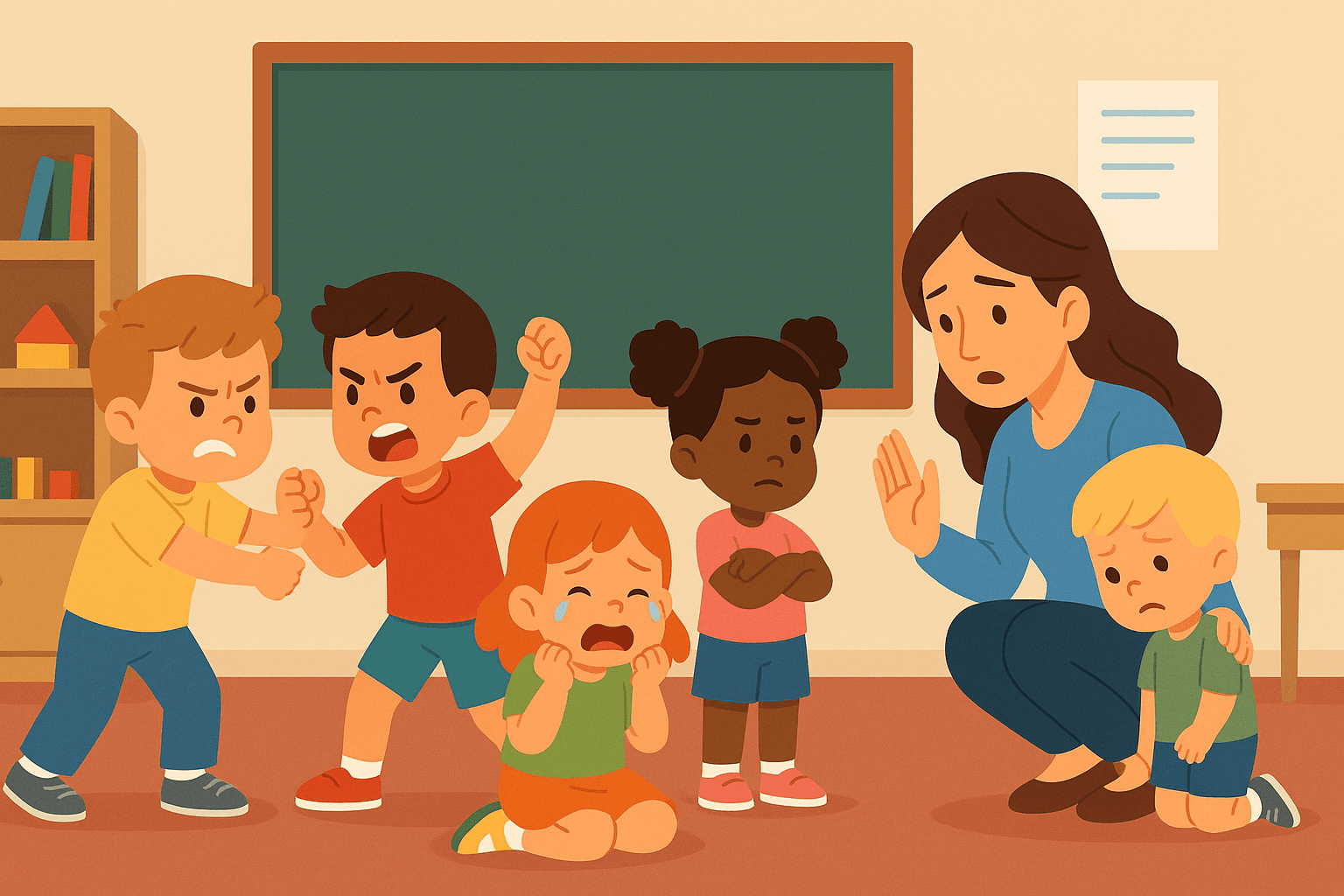
You're in the middle of circle time when you hear it — the thud, the cry, the sudden shift in the room's energy. Another child has pushed, hit, or grabbed. Again. You take a breath, move toward them, and wonder: what am I missing here?
Research Says
It's Communication, Not Defiance
Here's what child development research tells us: when young children lash out, they're not trying to ruin your day. Every behavior is a form of communication — and aggression is often a child's way of saying "I don't have the words" or "I don't know what else to do." Aggression co-occurs with impulsivity, emotion dysregulation and language delays, which means the hitting isn't the problem — it's the signal that a child needs support building skills they haven't developed yet. (Illinois Early Learning Project)
Try This
Get Close Before It Happens
Instead of waiting for the next incident, try positioning yourself near the child during times aggression typically shows up. Intervening just moments before prevents children from hitting or hurting others — you're not putting out fires, you're teaching a better way in the moment they need it most.
Name What You See Calmly
When aggression happens, stay calm and narrate what's happening without judgment: "I see two people who both want the same truck. Hitting stops now." Approach calmly, stop hurtful actions, get down on the children's level, and use a calm voice. You're teaching them that big feelings don't require big reactions from adults.
Here's What Matters
The fact that you're asking what you're missing means you already see these children as capable of learning something new. That's the whole thing. You're not trying to control behavior — you're teaching the skills they'll carry forward. And that work? It matters more than you know.