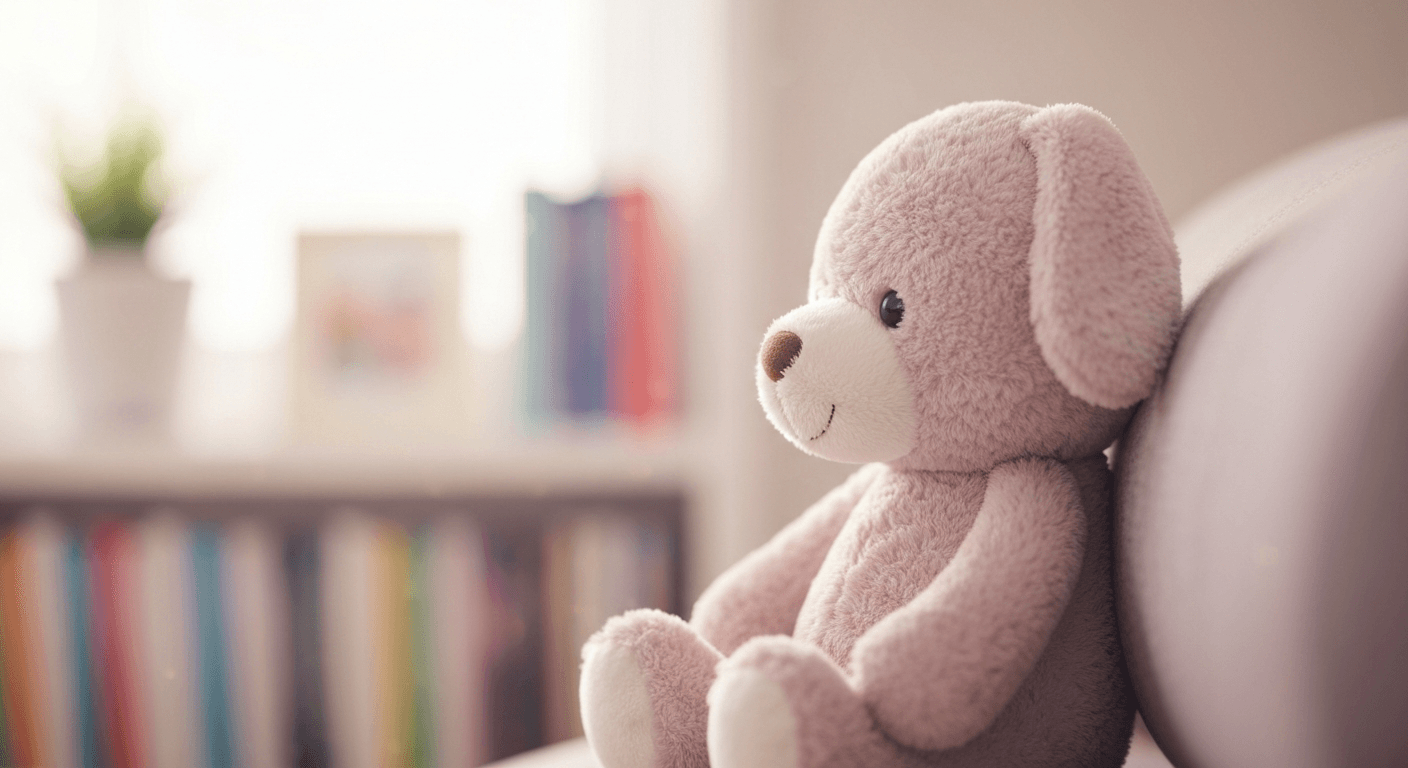
When Their Stuffed Animal Becomes Your Secret Helper
You notice your toddler won't go anywhere without that one stuffed bear. They hug it when they're tired, whisper to it at bedtime, pat its head just like you pat theirs. And lately, when you ask them to find their shoes, they'll do it—if Bear needs to come along.
The Friend They Choose
Child development research shows that children naturally attach to soft objects, especially during stressful or vulnerable moments—when tired, upset, or in new places. That stuffed animal? It's what researchers call a transitional object, but really it's their first practice at caring for someone outside themselves. When they listen to you because their bear is part of the plan, they're learning cooperation through love, not control.
Let Them Lead the Love
Notice how your child already treats their stuffed friend—the hugs, the gentle voice, the careful carrying. That's empathy in action. When you need their cooperation, try inviting the stuffed animal into the moment: 'Does Bear want to help us find your shoes?' You're not manipulating—you're meeting them in their world.
Name the Connection
When your child shows care for their stuffed animal, try naming what you see: 'You're being so gentle with Bear' or 'Bear feels safe with you.' You're affirming the kindness that's already there. The listening comes naturally when they feel understood, not instructed.
Here's what matters: you're noticing what your child loves and honoring it. That stuffed animal isn't a trick—it's a window into how your child makes sense of relationships, comfort, and showing up for someone they care about. You're not manipulating their attachment; you're respecting it. That's the whole thing.