"Do This!": Crafting Clear Instructions That Young Learners Can Follow
Why Clear Instructions Matter 🤔
Reduces Cognitive Load: Simplifying your message eases the mental effort your child needs to process and act on instructions.
Supports Brain Development: Following directions practices key executive functions—attention, working memory, inhibitory control—which strengthen neural pathways over time.
Builds Independence and Confidence: When children understand what to do and can complete tasks successfully, their self-esteem and sense of autonomy grow.
Reduces Frustration and Power Struggles: Clear communication minimizes misunderstandings, creating a calmer environment.
Enhances Language and Cognitive Growth: Concise, well-structured language models good communication habits and expands vocabulary within meaningful activities.
Strategies for Giving Clear Instructions 📝
Capture Their Attention First: Setting the Stage for Learning
Before giving instructions, ensure your child's brain is ready to process them.
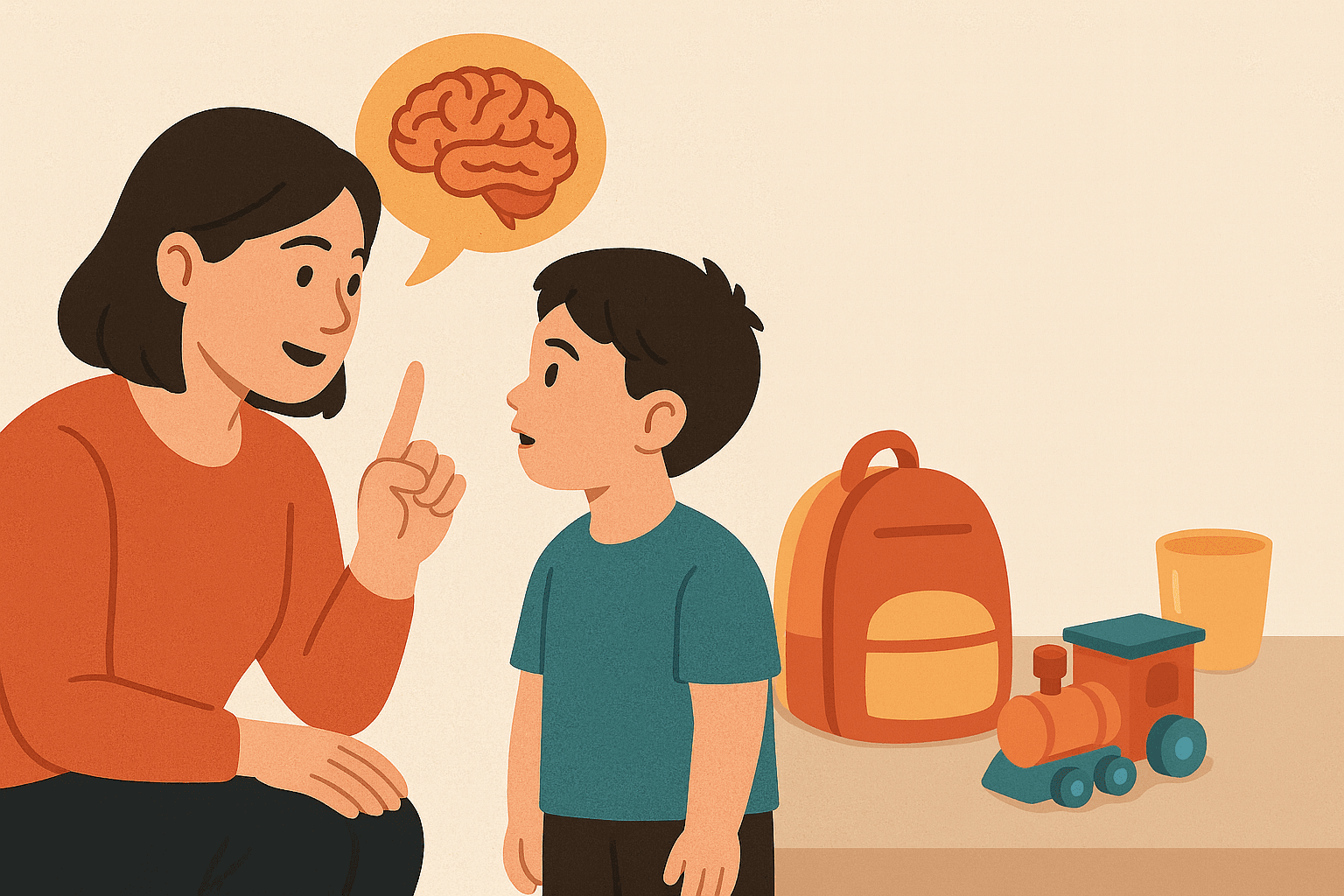
How: Get down to their eye level, make eye contact, gently touch their arm, or call their name. Wait until they acknowledge you.
Why: When a child's attention is engaged, neural pathways involved in hearing and memory are more receptive. Establishing eye contact and shared focus activates social brain areas, making learning more effective.
Keep It Short and Simple (KISS)
Respect their limited working memory by crafting brief, clear instructions.
How: Use straightforward, age-appropriate language—avoid long sentences or complex explanations. For example, say, “Put your blocks in the bin,” instead of “It’s time to tidy up now. Let’s put away all the toys before dinner.”
Why: Longer instructions may overload their developing brains. Short, concise commands are easier to encode, remember, and execute.
One Step at a Time: Simplify the Task
Young children often struggle with multiple instructions at once.
How: Break tasks into single steps. Give one instruction, wait for completion, then proceed. Instead of “Put on your shoes, grab your backpack, and meet me by the door,” try: “First, put on your shoes.” Once finished: “Great! Now, get your backpack.”
Why: The prefrontal cortex manages sequencing but is still maturing. Presenting tasks sequentially reduces cognitive demands, increases success, and boosts confidence.
Remember to 💡
Keep it close, clear, and one-step. Eye level, undistracted, and specific (“Walk” vs. “Don’t run”). Avoid shouting from across the room or multitasking, and don’t stack instructions.
Check—don’t chant. Have them echo or show the step (“What’s first?”). Repeat only after checking for understanding, and watch how they respond so you can adjust.
Stay calm and celebrate small wins. Use a warm tone (no threats), be patient with their developmental pace, and praise effort/completion to reinforce the habit.