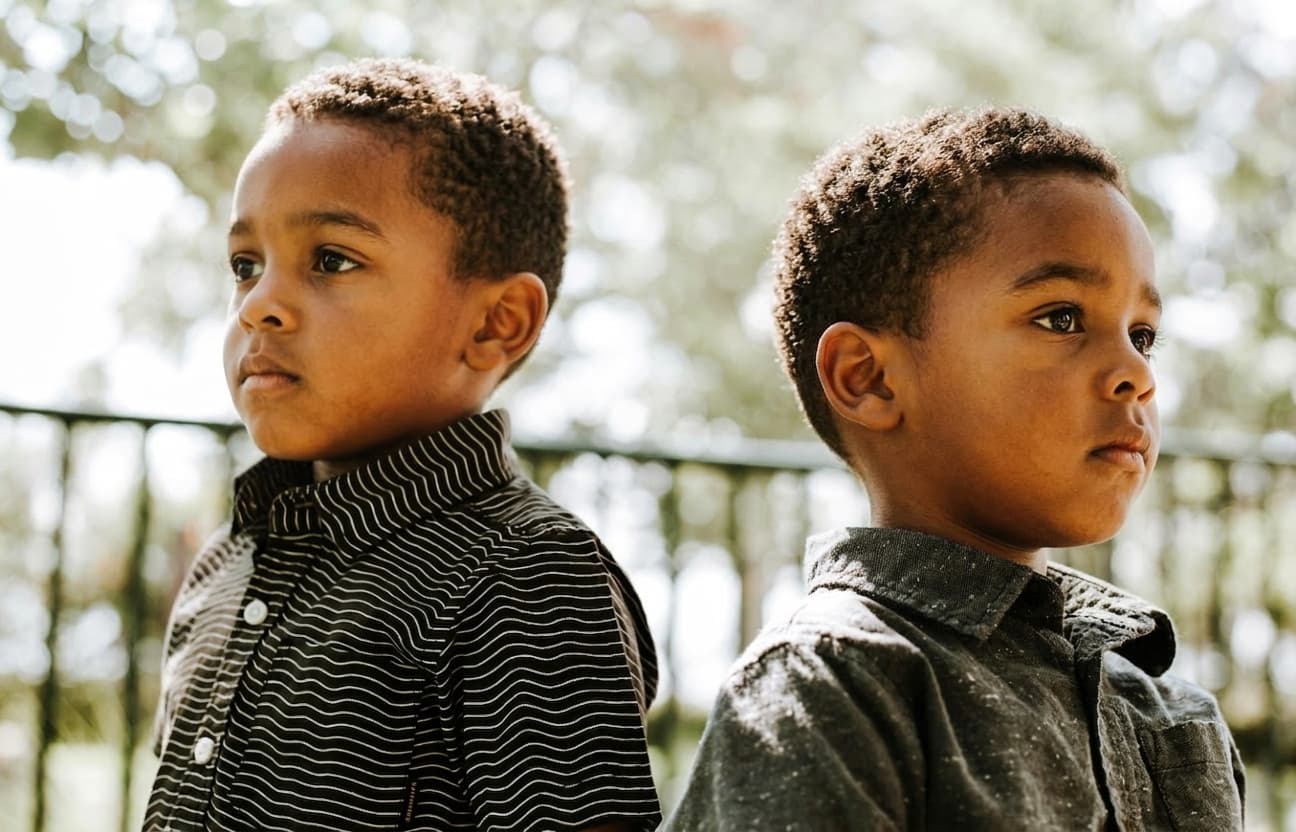
Same House, Different Childhoods
The Moment
You're scrolling through old photos and suddenly it hits you: the parent your oldest met wasn't quite the same one your youngest knows now. Same house, same rules, same bedtime stories—but somehow, not the same childhood. And that realization lands heavy.
Research Says
Every Child Meets Different Parents
Research from behavioral genetics studies shows that siblings often develop as differently as unrelated individuals, even when raised in the same home. Why? Because each child encounters parents at different life stages—more stressed or more calm, more anxious or more confident. The family they experience isn't identical. It's shaped by timing, birth order, and where you were in your own journey when they arrived.
Try This
Name What's Different
Instead of pretending everything was the same, try acknowledging it. 'I was learning how to be a parent with you' or 'Things were tighter financially back then.' Naming the difference doesn't mean you failed—it means you're honest.
Let Their Stories Coexist
When siblings remember things differently, resist the urge to correct the record. Their version is their truth. What if you said, 'That's how you experienced it'? You're not agreeing or disagreeing—you're making space for what they felt.
Here's What Matters
The fact that you're thinking about this—about how each child experienced family life—means you're already doing the deeper work. You didn't fail because your kids had different childhoods. You showed up in different seasons, and that's what real parenting looks like. Right there with you.