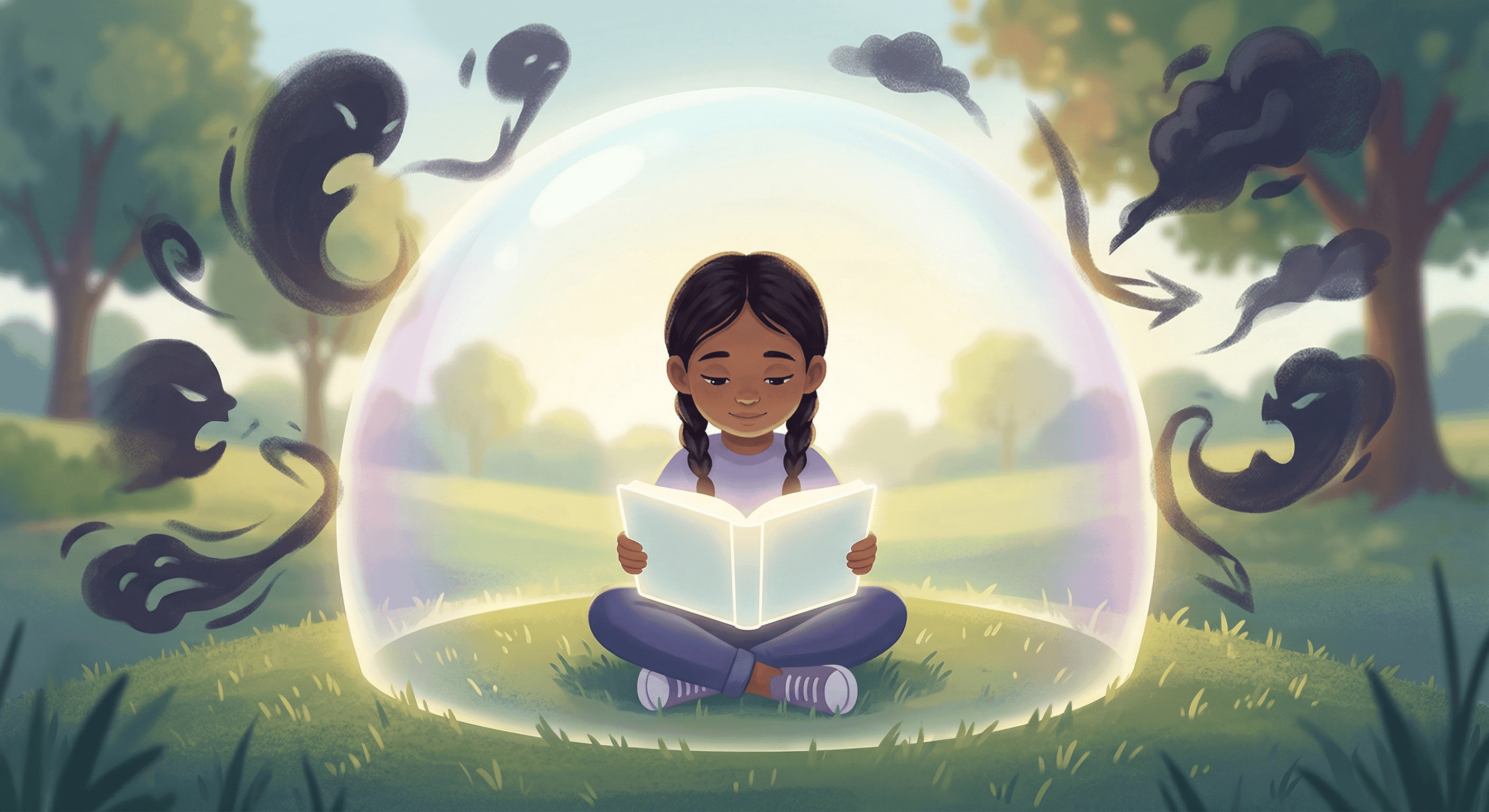
When Mean Words Come Home with Your Child
The Moment
Your child comes home from school, quieter than usual. Someone said something mean today—about their drawing, their outfit, the way they played at recess. You can see it sitting heavy on their shoulders, like they're carrying something that doesn't belong to them.
Research Says
Learning to Let Go
Research from the Journal of Child and Family Studies shows that when children develop early emotional boundaries—learning which messages to accept and which to release—they build stronger self-esteem and resilience. That invisible weight your child is carrying? They're learning they can set it down.
Try This
The Gift You Don't Keep
Try this together: "When someone says something mean, imagine they're handing you a gift you don't want. You can look at it and say 'no thank you' and hand it right back." Practice with stuffed animals during calm moments—not when emotions are high.
Name What's Theirs
At bedtime, ask: "Did anyone try to give you words today that weren't yours to keep?" When they share, acknowledge it—"That sounds like it was hard to hear"—then gently ask, "Do you want to keep carrying that, or give it back?"
Here's What Matters
Here's what matters: you're teaching your child that they get to choose what becomes part of their story. Not every hurtful word has to live inside them. That's a lesson some adults are still learning. You're giving them a head start.