When Sharing Feels Like Losing
The Moment
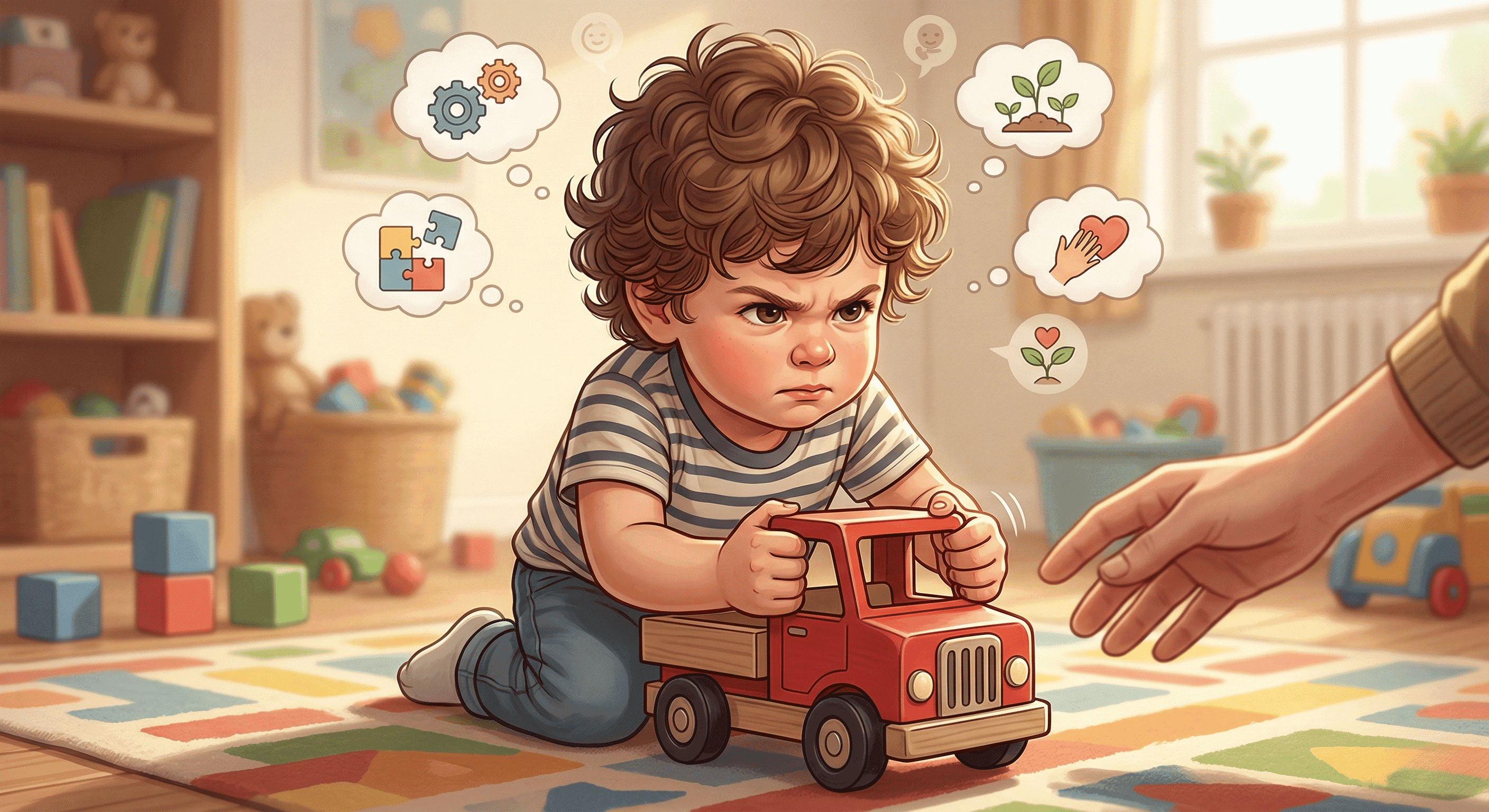
Your child's friend is over. There's a bin full of toys. But somehow, the one toy that matters most right now is the exact one their friend just picked up. Your child's face crumples. Their hands reach. You feel that familiar tug—do I make them share, or let them hold on?
Research Says
Sharing Requires a Sacrifice
Research from the National Institutes of Health found that sharing is uniquely difficult for young children because it "typically entails a sacrifice of something valued to benefit someone else." That grip on the toy? It's not selfishness—it's your child learning where they end and someone else begins. By age two, children can share voluntarily, but they need clear cues about another person's needs or wants. (National Institutes of Health)
Try This
Name What They're Holding Onto
Try: "You really want to keep playing with that truck right now." Naming the feeling helps them understand what's happening inside. Once they feel seen, the grip often loosens on its own.
Make Taking Turns Visible
Some families set a timer—three minutes for one child, then the other's turn. It makes waiting concrete instead of endless. Your child learns: sharing doesn't mean losing forever, just pausing.
Here's What Matters
Here's the thing: you're not just teaching your child to hand over a toy. You're teaching them that their feelings matter AND other people's feelings matter too. That's a big concept for a little person. The fact that you're thinking about how to guide them through it? That's the whole work right there.