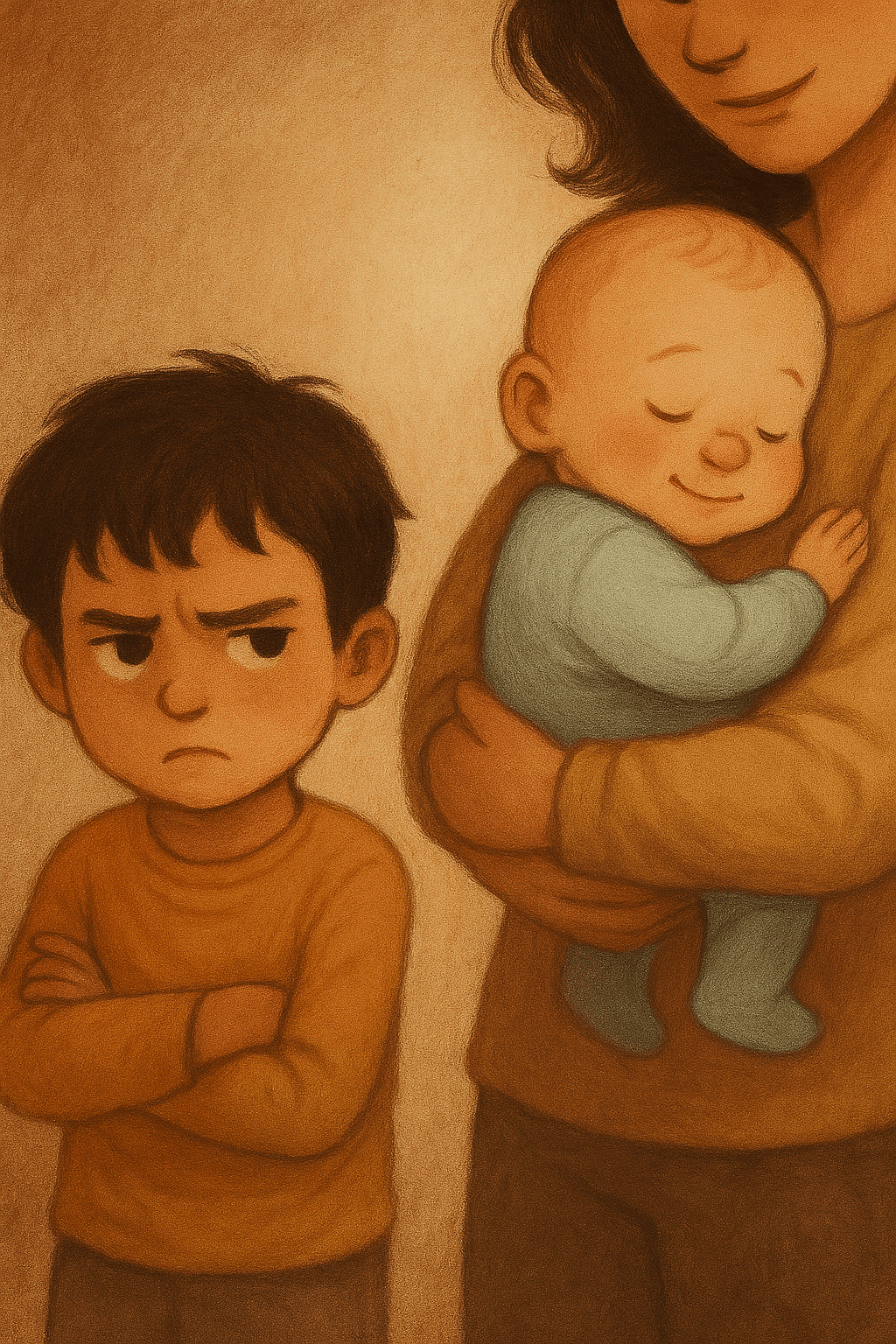
Sibling Rivalry or Big-Brother Blues? Supporting Identity Shifts After a New Baby
Understanding the Older Child's Perspective After a New Sibling Arrives
For an older child, daily life is centered around familiar routines, focused attention from caregivers, and a sense of being the primary recipient of love and care. The sudden addition of a new family member can disrupt this carefully maintained balance, triggering a range of feelings and behaviors that are entirely normal during a critical developmental stage.
The Identity Shift: From "Only Child" to "Big Sibling"
Before the birth of a sibling, many children perceive themselves as the "baby" or the "center of attention"—an exclusive focus of parental love. This self-perception influences expectations, behaviors, and their overall sense of self. When a new sibling joins the family, this narrative is challenged: they are no longer the sole focus but become a "big sibling," a role that entails new responsibilities, expectations, and sometimes feelings of confusion or overload.
Research indicates that such identity transitions can evoke feelings of:
Loss of Status: Feeling dethroned or replaced within the family hierarchy.
Role Confusion: Uncertainty about what it means to be a "big sibling" and how to behave.
Grief or Nostalgia for the "Old Normal": Missing the undivided attention and routines they once enjoyed.
Common Emotional and Behavioral Responses
Understanding these reactions as typical allows parents and caregivers to respond with patience and compassion. Common responses include:
Regression: Reverting to earlier behaviors such as thumb-sucking, bedwetting, or tantrums, often as a way to seek reassurance or regain a sense of security.
Attention-Seeking Behaviors: Acting out or defiance aimed at drawing focus back to themselves.
Jealousy and Resentment: Directed toward the baby, parents, or belongings perceived as taken or shared.
Anxiety or Insecurity: Concerns about being less loved or feeling overlooked.
Withdrawal: Becoming more reserved or less engaged socially or emotionally.
Mixed Emotions: Feeling proud or loving toward the new sibling, while simultaneously experiencing frustration or anger—an expected emotional complexity at this stage of development.
Evidence-Based Strategies to Support Identity Transitions
Supporting an older child's emotional and developmental adjustment involves intentional, empathetic actions grounded in research on childhood needs and family dynamics. These strategies help validate feelings, clarify roles, and build a sense of security and belonging.
1. Preparation Is Essential (Before and After Birth)
Research underscores that thorough preparation minimizes anxiety and eases transition stress:
Involve Your Child in the Pregnancy: Share age-appropriate information about the pregnancy, discuss upcoming changes, and include them in activities like feeling the baby's kicks or seeing ultrasound images.
Use Children's Literature & Storytelling: Select books that focus on becoming a big sibling or craft personalized stories featuring your child's name and experiences.
Practice Through Play: Use dolls, stuffed animals, or role-playing to prepare them for routines such as diaper changes or soothing techniques.
Arrange Meet-and-Greet Opportunities: When possible, visit friends or relatives with newborns to familiarize your child with the presence of a new family member.
Create Their Own Space: Establish a dedicated area or room for your child prior to the baby's arrival, which can serve as a stable sanctuary amid family changes.
2. Validate Feelings & Acknowledge the Transition
Child development experts highlight the importance of emotional validation:
Name and Normalize Feelings: Help children articulate emotions—"It looks like you're feeling sad because Mommy's busy with the baby."
Avoid Dismissing Emotions: Refrain from phrases like "You love your sister, don't be silly," which can invalidate their feelings.
Normalize Mixed Emotions: Reinforce that experiencing a range of feelings during big changes is natural, helping children feel safe in sharing their emotions.
3. Affirm Their New Role and Importance
Research indicates that positive reinforcement and role affirmation boost children's confidence:
Highlight Their Unique Qualities: Emphasize strengths like kindness, helpfulness, or talents.
Assign Age-Appropriate Responsibilities: Offer simple tasks—such as fetching diapers, choosing an outfit, or singing to the baby—that foster pride and a sense of purpose.
Schedule Special One-on-One Time: Engage in daily activities—reading, playing, cuddling—that make your child feel valued beyond their sibling role.
Use Specific, Encouraging Praise: Recognize helpful behaviors—"I loved how gently you patted your sister"—which supports positive interactions.
Provide Symbols of Their Role: Offer a meaningful gift, badge, or book that celebrates their new role as a big sibling, reinforcing their importance in the family.
4. Cultivate Connection and Support Natural Bonding
Building a loving sibling relationship develops over time and with patience:
Involve Them in Baby Care: Supervised activities such as helping with diaper changes, choosing toys, or pushing the stroller promote shared responsibility and bond-building.
Allow Organic Interactions: Avoid forcing affection; let relationships develop naturally to prevent resentment.
Explain Fairness Over Equality: Clarify that "fair" doesn't necessarily mean "equal," especially when the baby's needs are immediate.
Engage in Shared Activities: Read stories together, sing songs, or play simple games suited to their age, fostering cooperation and shared joy.
Model Positive Behavior: Demonstrate kindness, patience, and cooperation in your own actions, providing a blueprint for sibling relationships.
5. Patience and Continuous Support
Research confirms that adjustment is a gradual process:
Recognize Emotional Evolution: Feelings and behaviors may fluctuate; ongoing reassurance helps children adapt.
Address Regressive Behaviors with Compassion: Regressions are often signals of a need for reassurance, so responding with understanding supports emotional security.
Seek Professional Guidance if Needed: If behaviors become extreme or persistent, consulting with a child psychologist or family therapist is advisable.
What's Next... Turning Challenges Into Lasting Sibling Bonds
By understanding the profound identity shifts involved and responding with empathy, patience, and intentional support, parents can transform this challenging period into an opportunity to build resilient, affectionate sibling relationships. Moving beyond superficial rivalry, nurturing emotional health through active, compassionate engagement fosters a sense of belonging, love, and lifelong bonds.